Tag: hatha yoga

  • yoga sutra

    yoga sutra

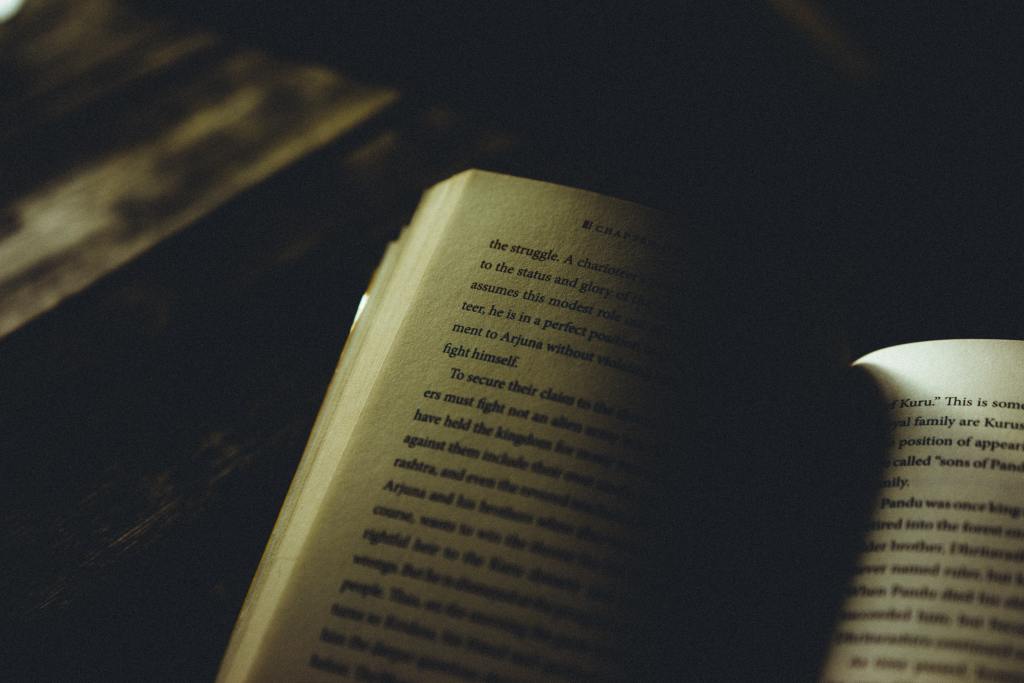
    What are the sutras?  Is a sutra, as it has been described, an “unintelligible statement waiting for an explanation” ?                     Certainly, they are very technical statements, comparable to mathematical formulas. 

    How did this style of writing evolve? 

    Sutras were originally meant to be preserved in the living memory of a human being, rather than in books. They belong to the Neumonic oral tradition, so their poetic style helped in memorising.

  • bhramari pranayama

    bhramari pranayama

    By filling the air with force, making noise like Bhringi (wasp), and expelling it slowly, making noise in the same way; this practice causes a sort of ecstasy in the minds of Yogindras (Hatha Pradipika 2:68).

    The sound produced is a nasal sound caused by the vibrations of the soft palate. Rechaka is prolonged as usual the double of time of puraka. Many people produce “ma” like that of aum, they close the ears with the thumbs and put above the nostrils the little fingers, this helps them to concentrate and be able to feel the vibrations of the sound at the spine or in the forehead.

    This pranayama can be practiced with (the 5 fingers are positioned over the 5 senses) or without sanmukhi mudra, in the second case is indicated for insomnia and constipation cause it generates a vibration at a cellular level.

  • bhastrika pranayama

    bhastrika pranayama

    In the pose of padmasana, expel the air through the nose. It should be filled up to the lotus of the heart, by drawing it in with force, making noise and touching the throat, the chest and the head. It should be expelled again and filled again and again as before, just as pair of bellows of the blacksmith is worked (Hatha Pradipika 2:60-62).

    Act of exhalation is more forceful and quick compared to inhalation, which is rather slow and less forceful.  Both the acts are done rapidly and performed again and again quickly.  The technique consists of two parts:

    • the first part consists of 20-40 strokes of kapalbhati
    • second part contains puraka, kumbhaka and rechaka phases.  Immediately after first part puraka is done through right nostril followed by kumbhaka for a proportionate time, during this time the three bandas can be applied, then rechaka is done through the left nostril, after releasing bandas.

    All the three doshas are maintained in a balanced state, bodily fire increases, the sacral part is stimulated, for that is useful for kundalini awakening.

  • the aims of pranayama

    the aims of pranayama

    If the breathing is continued the mind remains unstable. When the breath is stopped the activity of the mind is also controlled and it becomes still (Hatha Pradipika 2:2).

    Since the mind becomes steady after practicing pranayama, it becomes capable of concentrating on one object at a time. Such one-pointedness is a prerequisite of dharana (Patanjali Yoga Sutras 2:52-53).

    One of the aims of pranayama is also to cure the psychosomatic diseases, that are the ones that are caused by mental disturbances. By judicious practice of pranayama one attains sound health, steady mind, slim and lustrous body (Hatha Pradipika 2:16-18). 

    Although breathing is mainly an unconscious process, conscious control of it may be taken at any time and consequently it may form a bridge between the conscious and unconscious areas of the mind. Through the practice of pranayama the nergy trapped in neurotic and unconscious mental patterns may be released for use in more creative and joyful activity (Swami Satyananda Saraswati, 1969, Asana Pranayama Mudra Bandha).  

    The ancient yogis and rishis noticed observing animals that is important the slow breathing for increasing the human lifespan, because the respiration is directly connect with the heart.

    On a spiritual level Swami Sivananda writes “There is an intimate connection between the breath, nerve currents and  control of the inner prana or vital forces. Prana becomes visible on the physical plane as motion and action, and on the mental plane as thought. Pranayama is the means by which a yogi tries to realize within his individual body the whole cosmic nature, and attempts to attain perfection by attaining all the powers of the universe.”